

As a high school student, and even during my college years, I was unsure what the term “mentorship” meant. It wasn’t until I started working at NASA and taking leadership classes that it became clear. That’s when I realized I had been mentored before by my dad, not as a parent mentoring their child, but in mentoring to gain knowledge about a job.
At 10 years old, my dad bought a donut shop. He began teaching me the business, starting with how to make donuts. Then he introduced me to the business side, including purchasing ingredients and managing the books. Along the way, I learned about time management and collaboration. This training proved valuable later in life, when I was 16, my dad had a non-fatal heart attack. It became my responsibility to keep the business running so my family could eat and have a roof over our heads. Reflecting on the challenges of managing the business while attending school, I realized it was a valuable lesson in the importance of mentorship for success.
Although it wasn’t the same as my dad mentoring me to learn the business, the guidance I received when I first started working at NASA’s Tracking and Communications Division, Telemetry and Audio section, helped launch my professional engineering career at NASA by increasing my knowledge of space systems engineering.
Early on, I was involved in telemetry research and was tasked with leading speech control of the closed-circuit television for the Space Shuttle flight project scheduled for launch. NASA flight project procedures were utterly new to me—in fact, I didn’t even know that flight procedures existed. Through my supervisor and contractor engineer, I quickly identified which experienced engineers to contact and what information I needed to design, build, and certify the system for flight. Two of the NASA engineers continued to mentor me beyond my flight project, helping me develop my engineering skills, for which I was grateful. It became clear that communication between mentor and mentee was critically important! Asking my mentors questions to fill the knowledge gaps between college and the real world of engineering was vital if I was to succeed.

During my second year at NASA, I was assigned an intern as part of my duties. Andy, an electrical engineering major from New Mexico, had applied for an internship to develop advanced telemetry and audio systems. Honestly, I wasn’t sure what guidance a mentor was supposed to give or what role I should play. I took it upon myself to learn more about my mentorship responsibilities and how to mentor effectively. I researched mentoring and even completed a NASA course on leadership that included mentoring. Based on my analysis, I created a one-page summary to guide my interactions with the NASA interns assigned to me. It outlined the internship, my expectations, my availability, and my contact information. I kept it simple and easy to understand, sharing it with the intern before they started their internship to help them prepare. Over the years, the interns I mentored have given me positive feedback for my approach.
Over my 40-plus-year career, I have engaged in various types of mentoring—’ one-on-one,’ ‘ group,’ and ‘e-mentoring.’ My mentoring has extended beyond interns at work; I have also mentored high school and university students working on projects that required guidance. Additionally, I have mentored international students from the USA and Puerto Rico, as well as from countries such as India, Mexico, Australia, the United Kingdom, and Pakistan. Many of the NASA interns I mentored went on to work for NASA or other aerospace companies. Outside of NASA mentoring, I helped dozens of students who reached out to me, aiming to help them gain employment, expand their opportunities to attend university or pursue graduate studies, or become better engineers. Sadly, one thing I found disturbing was how few of my colleagues were not interested in mentoring. To me, it was a no-brainer- share knowledge with students and help them overcome obstacles to be successful.
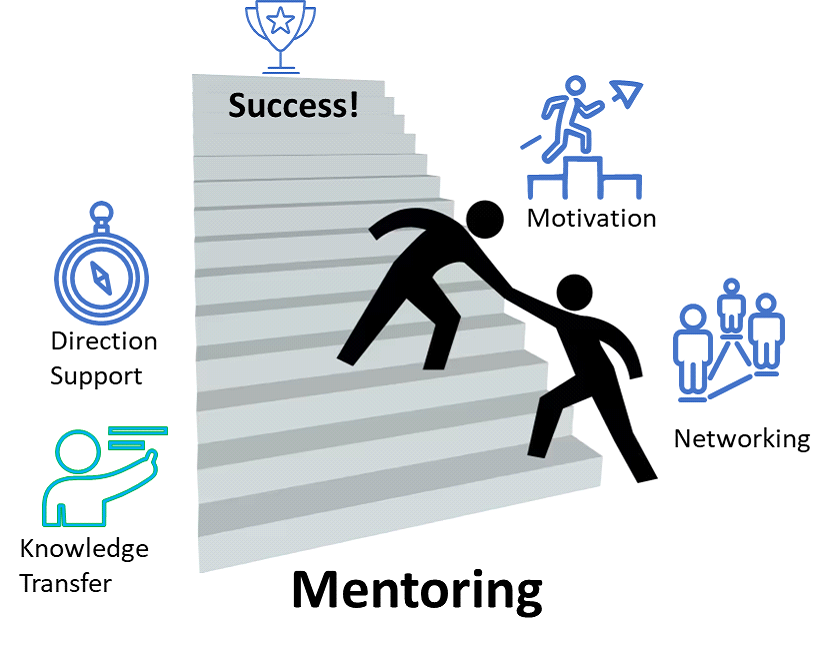
In short, the many years I spent mentoring interns and students were fulfilling. I remember a Leadership class where the instructor said that one of the most significant rewards of mentoring is seeing your efforts help a student become more than they believed they could be. He was right. In a way, I feel the students I have mentored—sharing my knowledge, helping them find their direction in life, networking with other professionals, and guiding them to develop their mindset—these are the attitudes that shape how they respond in situations. They are a legacy I will leave behind. I sincerely hope they become the new mentors, guiding the next generation of STEM leaders.